
CanSkate Information
Minto Skating Club
Basic Introduction
- CanSkate is Skate Canada's flagship program and Canada's only national learn-to-skate program.
- Strong basics for hockey, ringette, speed and figure skating.
- Designed for beginners of all ages.
- Skaters will earn badges and other incentives as they learn fundamental skating skills.
- Lessons are given in a group format and led by an NCCP (National Coaching Certification Program) certified coach.
- Coaches are assisted by trained Program Assistants. The coach to student ratio is a maximum of 1:10.
Skate Canada Membership
- Individuals who participate in a Skate Canada program will become Associate members of Skate Canada. All Skate Canada members are assigned a unique membership number that is theirs for life.
- The Associate member fee is an annual fee of $61.70 and is paid directly to the member club or skating school, who will then submit it to Skate Canada. Included in this fee is the mandatory member accident insurance.
CanSkate Program
The CanSkate program consists of:
- Stage 1 to 6 badges
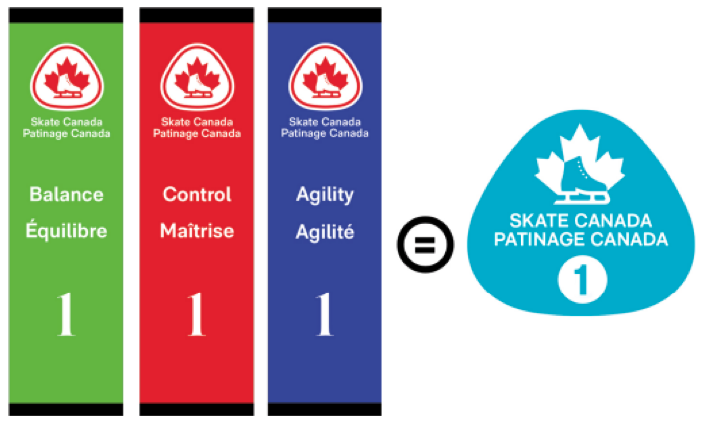
- There are three fundamental areas called Agility, Balance, and Control (the ABCs of skating!)
The three fundamental areas have strong focus on skating for all skating sports (figure/speed skating, hockey and Ringette)
- Agility focuses on jumps and turns
- Balance focuses on forward skating
- Control focuses on backwards skating and stopping
All three fundamental areas begin with the basic skill. As the skater progresses through the elements in each stage, the skater is then challenged to increase the speed and/or difficulty of the element.
Technical focus
- Speed will be more of a focus with features such as the fast track and specific speed- related drills.
- Activities highlighting flexibility will be incorporated into the sessions to ensure appropriate development of this skill.
- Stage 1 - 3 introduce the use of edges, turns and skating basics
- Sport specific skills will be introduced in Stages 4 - 6
Emphasis on skill progression and repetition:
- Better skill progressions will be reinforced as the skaters develop skills.
- Skills will be repeated at various stages throughout the program with gradually increasing the performance requirements.
Awards
Additional awards in the form of ribbons which correspond to the new fundamental areas have been added to provide skill benchmarks and help motivate skaters.
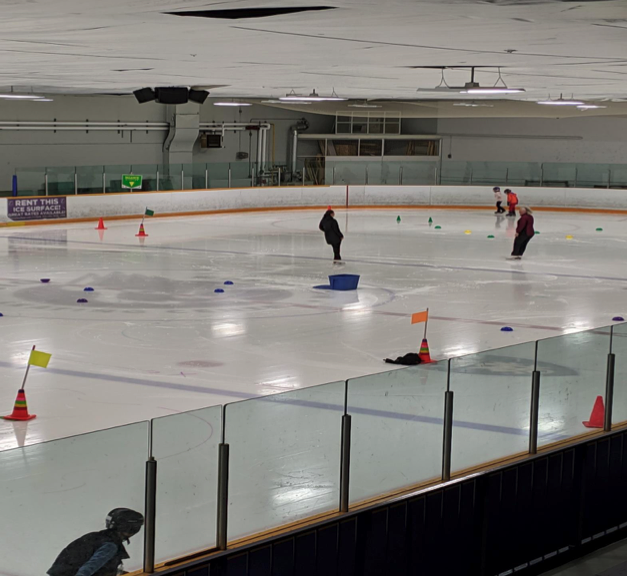
What does the CanSkate session look like?
- Colourful teaching aids
- More Signage
- Circuits
- Station rotation
- Fast Track
- Challenge Zone
- Up Beat music
What to expect when first showing up at the Rink?
- Pick-up your child’s name tag and make sure it’s securely fastened to an outside layer of clothing. Please do not take the name tags home, your coach will be removing them before the end of the session.
- Please use the assigned dressing rooms or the rink stands to get your child ready for the session.
Rules for the Ice
- NO food, drink or gum on the ice
- NO one is allowed on the ice with-out skates
- All skaters must wear a CSA approved hockey helmet
- All skaters must be register with Skate Canada
- NO un-instructed games, example tag
- Horseplay will NOT be tolerated and skaters will be asked to leave the ice.
Parents or Guardians
Parents or guardians are required to be present for the duration of the CanSkate session. Skaters are not permitted to leave the ice during a session unless a parent or guardian is at the door to meet them.
Equipment
Helmet Policy
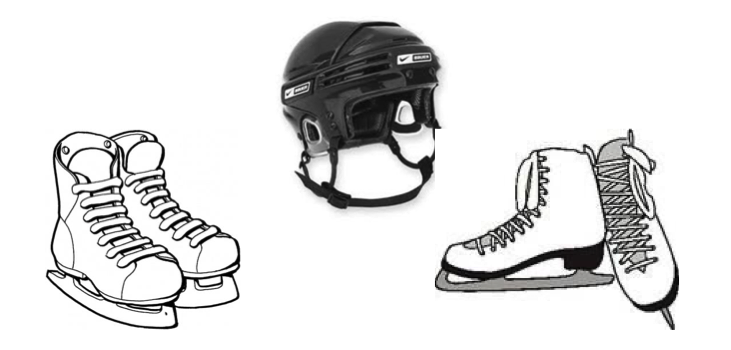
- Skate Canada requires all skaters on a CanSkate session to wear a CSA Hockey helmet. Bicycle, ski and snowboard helmets are not permitted.
- Skaters will NOT be allowed on the ice without the proper helmet
Fitting a Helmet
- Protection: A chinstrap should be snug to help prevent any shifting and maximize protection. The helmet straps should be adjusted and gently have contact under the chin when fastened
- Comfort: You should always look for equipment that feels comfortable. Although most helmets are lined with a protective foam, some helmets will feel better than others. Try on different brands of helmets for fit and comfort.
- Fit: With your helmet opened to it’s largest setting gradually begin to downsize the helmet until a comfortably snug fit is achieved. The helmet should rest on the head so that the rim is one finger width above the eyebrow and making contact with the top of your head.
- Hats should not be warn under the helmet. If the helmet fits properly it will keep your child warm. The hat will slide down and cover their eyes, making it very dangerous.
Fitting Skates
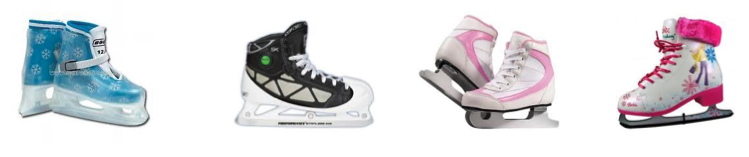
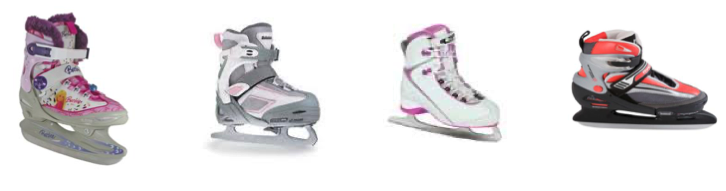
- Start with the basic models of a good quality skate. Skaters at the beginner level do not need top-of-the-line skates, but do need adequate support and a good fit.
- Shop at a skate or sport shops, speciality shops often have buy-back programs and a stock of good “lightly used” second hand skates.
- Skates run a bit large, so start with a couple sizes smaller than their shoe size when trying on. Try on skates with their normal sock (no extra socks).
- Lace up the skates all the way, including the top notch. While they can have a small amount of room to grow, ideally the skates should fit fairly snug.
- Have the child walk in the skates. There should be no rise in the heel or too much wiggle room in the toes.
- Different brands will fit different types of feet; if one brand doesn’t seem to fit properly try a different brand.
How to Tie Skates
- The laces should be snug but not too tight from the toe of the skate to the ankle.
- At the ankle, laces should be quite tight. This will give the ankles the support they need.
- Above the ankle, it is best to tie the laces fairly loosely. This way, it will be much easier for your child to bend, which is very important in skating.
Suggested skates for Stage 1-2:
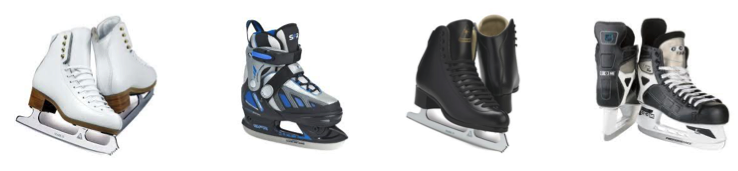
NOT Suggested Skates
Suggested skates for Stage 3+:
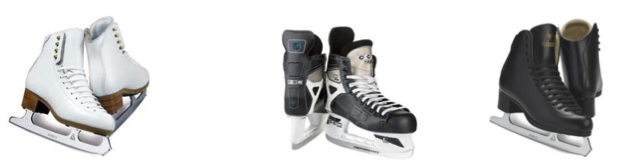
NOT Suggested Skates
Skate Sharpening
- Skates should be sharpened after about 30 hours of use, if well looked after.
- Toe picks should not be remove; they assist with balance and are not only for jumping.
Recommended Skate Sharpeners:
- Figure 8 Skate Specialists — 380 Industrial Avenue / (613) 731-4007
- B-Sharp Ottawa
-
- 4235 Standherd Dr. Unit 2 / (613) 680-4800
- 813 Shefford Rd / (613) 825-9110
Clothing
What to Wear
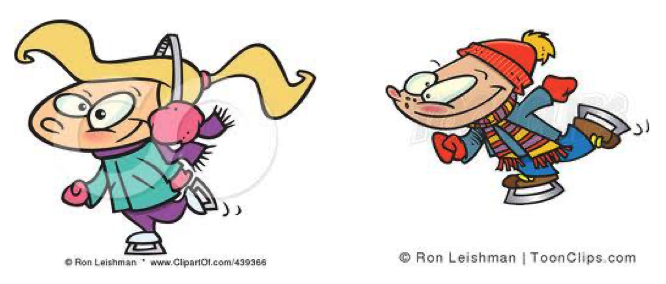
Layering clothing is the best wya to ensure your child stays warm while skating
To Wear |
Not to Wear |
| Mitts/Gloves | Scarfs |
| Splash pants | Jeans (soak up water, become heavy and cold) |
| Vests | Long coats |
| Bomber style jackets | Ski pants |
| long underwear/tights | Snowsuits |
| Sweaters | Pants that are flared at bottom |
* Please make sure that pant legs DO NOT hang below sole of skate. Your child may trip and hurt themselves.
Protective Wear
Knee pads should be worn under pants. When placed over the pant leg, they slide on the ice and make it difficult to get up.
At Minto we offer a CanSkate program for those skaters working on Stage 3+ on Saturdays at 2pm.
The NextSTAR program is for those skaters interested in figure skating working on Stage 4+. Skaters are invited to this transitional program which is recommended to continue to participate in the CanSkate program.